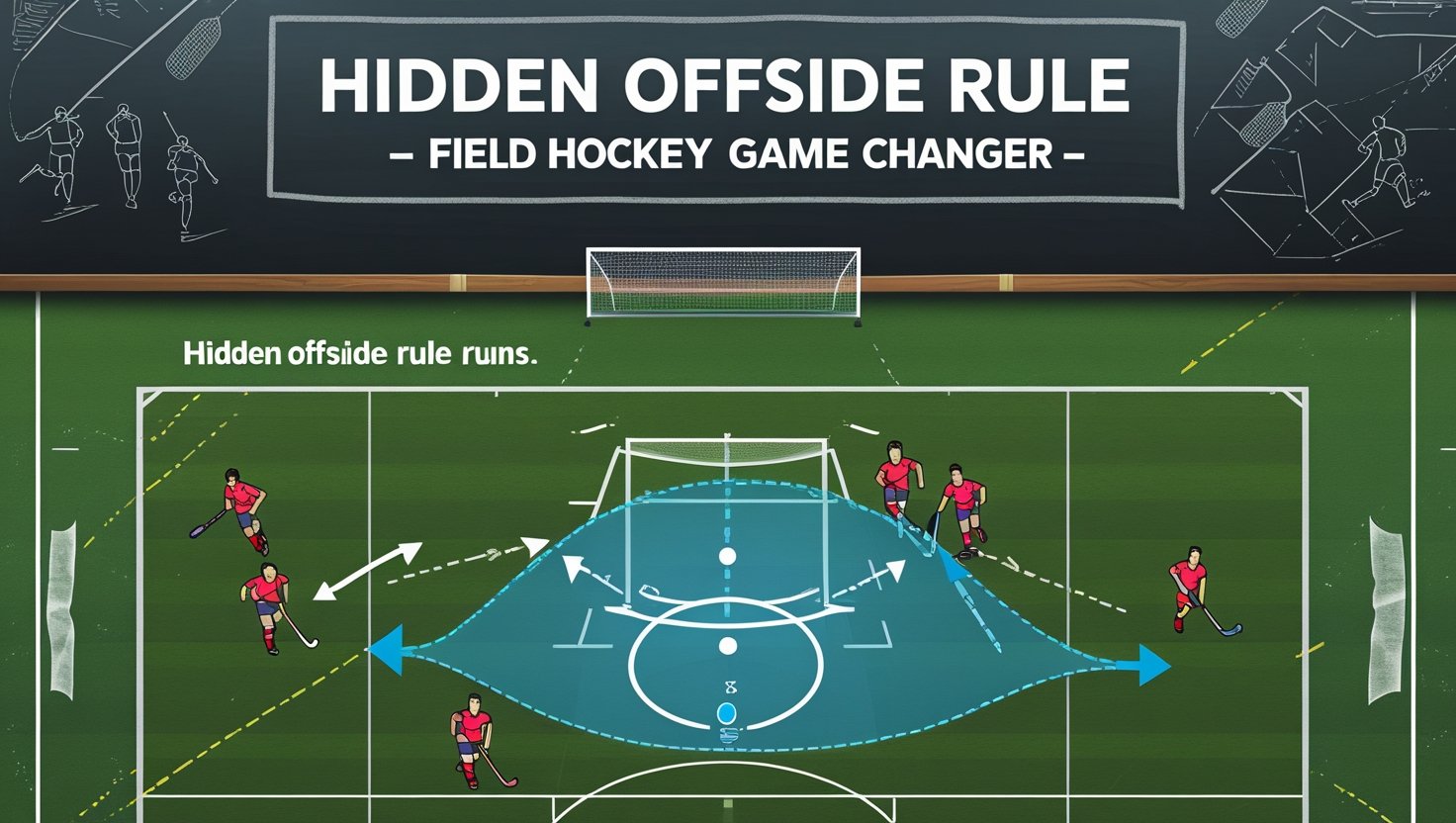
Imagine a time when a seemingly simple rule determined the fate of every attacking move on the field. In the early days of field hockey, the offside rule, though now hidden in the annals of history, once dictated player positioning and strategy. Today, that long-abolished rule continues to shape tactical thinking and inspires discussions among enthusiasts about balance and innovation. With the removal of the offside rule in the mid-1990s, the game burst into a freer, faster sport. This article unearths the hidden influence of that rule and explores how its legacy remains a true game changer in modern field hockey.
A Glimpse into the Past:
In the formative years of field hockey, the offside rule was a fixture that demanded players maintain strict spatial discipline. Traditionally, the rule required that an attacking player had to have a minimum number of opponents, often three, between themselves and the goal line when receiving a pass. This limitation, similar in spirit to early offside rules in soccer, was designed to prevent “goal hanging” and to ensure that play was both fair and measured.
Over time, however, the rule’s restrictions began to choke the natural flow of the game. Coaches and players found that the offside rule forced teams into overly defensive postures, reducing the game’s pace and limiting creative attacking play. Despite its intended purpose for balance, the rule blurred offensive potential with defensive strategy, often dampening the excitement that the sport was meant to inspire. Today, while the rule is formally absent from the regulations, its legacy lingers, its hidden influence continues to spark debates and inspires nostalgic remembrances among purists who recall an era when every move had to be calculated against a strict spatial code.
The Transformation:
The abolition of the offside rule in the mid-1990s marked a pivotal turning point for field hockey. By eliminating one of the most restrictive elements of play, the game transformed from a cautious, methodical contest into a rapid, free-flowing battle of skill and agility. The decision to remove the rule was not taken lightly; it was based on the goal of transferring the balance of power toward offense, thereby enhancing excitement and increasing scoring opportunities.
With no offside law to hold them back, players suddenly found the entire field open to innovative play. Attacking teams capitalized on previously limited spaces, orchestrating quick counter‑attacks and exploiting gaps that earlier would have resulted in a free hit for the opposition. Coaches quickly adapted, developing new formations that leveraged the increased freedom, emphasizing fluid transitions and relentless pressure on defenses. As a result, modern field hockey evolved into a sport where tactics are defined by continuous movement and creative positioning, making every match a showcase of ingenuity. The removal of the offside rule remains a celebrated milestone, a classic example of how rule‑changes can propel a sport into a more dynamic future.
Legacy Tactics:
Although field hockey players no longer need to worry about an offside call, the historical mindset remains a subtle undercurrent in modern strategy. Veterans who played before 1996 often reminisce about how the offside rule honed their spatial awareness, teaching them to constantly measure their position relative to both the ball and their opponents. This ingrained sense of positioning still informs tactical planning, even if indirectly.
Teams today sometimes apply “offside‐inspired” tactics when structuring their defense. For instance, defenders might subconsciously position themselves in ways that harken back to when marking attackers away from the goal was critical. Likewise, attackers, aware of these shifting defensive patterns, often work to exploit small pockets of space left by opponents who instinctively mirror the old rules. In this way, the hidden offside rule lives on as a foundational concept, influencing formations and play styles despite no longer being a formal rule. It is a rich reminder that even abolished regulations can leave a lasting imprint on how a game is played.
Crafting a New Era:
With the removal of the offside constraint, modern field hockey has embraced an era defined by boundless creativity and fluid play. The open field has become a canvas for innovation, where rapid movement and unrestricted positioning allow athletes to craft mesmerizing plays. This newfound freedom has led to the development of lightning-fast counter‑attacks, unpredictable dribbling maneuvers, and a renewed focus on offensive ingenuity.
Technological advances and improved athletic conditioning have further amplified this evolution. High‑definition video analysis and advanced training methodologies have given coaches deeper insights into player movement, helping them design strategies that extract the maximum potential from an open‑field format. As a result, the game today is more spectator-friendly and higher scoring, with a tempo that captivates audiences worldwide. This dramatic shift not only illustrates the benefits of a rule-free offensive landscape but also demonstrates that sometimes, removing a long-standing limitation can unlock performance levels that redefine the sport itself.
Game-Changing Dynamics:
The absence of the offside rule has rebalanced the tactical dynamics of field hockey. On the offensive end, players enjoy the luxury of space to launch daring runs, combine with teammates, and create scoring opportunities that were previously stifled by regulatory constraints. The greater emphasis on forward momentum and creative passing has led to a surge in spectacular goals and sustained attacking pressure.
Defensively, however, the game has not become any easier. Without the offside rule, defenders are compelled to rethink traditional marking strategies, often resorting to dynamic, zone-based approaches that require constant communication and high levels of coordination. This balancing act between attack and defense has spurred a wealth of tactical innovation. Coaches now place high importance on adaptability, training players to switch roles fluidly and to anticipate the rapid shifts that characterize modern matches. By removing rigid positional rules, field hockey has encouraged a strategic evolution where both offensive flair and defensive resilience are celebrated equally, making it a true game changer in the sporting world.
Hidden Impacts:
Even though the offside rule has been formally retired for decades, its historical impact continues to shape the ethos of field hockey. It serves as a potent reminder that the evolution of sports frequently requires bold experimentation and a willingness to let go of tradition in favor of progress. The rule’s abolition was part of a broader trend towards creating sports that are more engaging and dynamic, and it underscores the importance of continuous innovation.
For today’s athletes, the lesson is clear: understanding the past is as crucial as embracing the future. The strategies that emerged from the offside era continue to influence how players perceive space and movement. Furthermore, the debate over what constitutes fair play and balanced competition is ongoing, spurring discussions about whether any “hidden” elements should be reintroduced to refine the game even further. As field hockey evolves, the insights gleaned from the offside era remind us that sometimes the most transformative changes come from eliminating constraints rather than imposing new ones.
Looking Ahead:
As the sport continues to innovate, it is natural to wonder whether any adaptation of the offside rule might be re‑imagined to serve modern field hockey. Some analysts propose experimenting with a modified “hidden offside” concept, one that is less restrictive than in the past but still aims to guide spatial dynamics and encourage even greater tactical symmetry. Such a rule could, for instance, be designed to minimize defensive congestion without curbing the creative freedom that players now enjoy.
While the prospect remains largely theoretical, the ongoing discussions among coaches, players, and regulators highlight the ever-evolving nature of competitive sports. The challenge lies in striking the right balance between tradition and innovation, honoring the lessons of the past while paving the way for bold new strategies. Whether or not a hidden offside rule makes a comeback, the conversation itself fuels further innovation and recalls the transformative power of re-examining the core principles that govern our favorite games.
Conclusion:
The history of field hockey demonstrates that even rules long cast aside can wield a lasting influence. The removal of the offside rule was a game-changer that unleashed a wave of offensive creativity and strategic evolution, and its hidden impact still resonates on the field today. By honoring the lessons of the past and adapting them to the present, players and coaches continue to push the boundaries of what is possible in the sport. In the dynamic world of field hockey, the spirit of innovation endures, reminding us that the most profound changes often come from letting go of outdated constraints and embracing a freer, more inventive future.
FAQs:
1. What was the offside rule in field hockey?
An early rule that restricted attackers based on their position relative to opponents and the goal.
2. Why was the offside rule abolished?
It was removed to encourage freer play, increase scoring opportunities, and enhance game flow.
3. How did its removal change field hockey?
The game became faster, more dynamic, and tactically flexible for both offense and defense.
4. Does the offside rule still influence players today?
Yes, its legacy instills a subtle awareness of space and positioning in strategic planning.
5. What benefits have emerged since the rule’s abolition?
Greater attacking freedom, innovative play styles, and a more spectator-friendly game.
6. Could a modified offside rule return in the future? Some suggest experimenting with a less restrictive version to further balance play, though it remains a topic of debate.