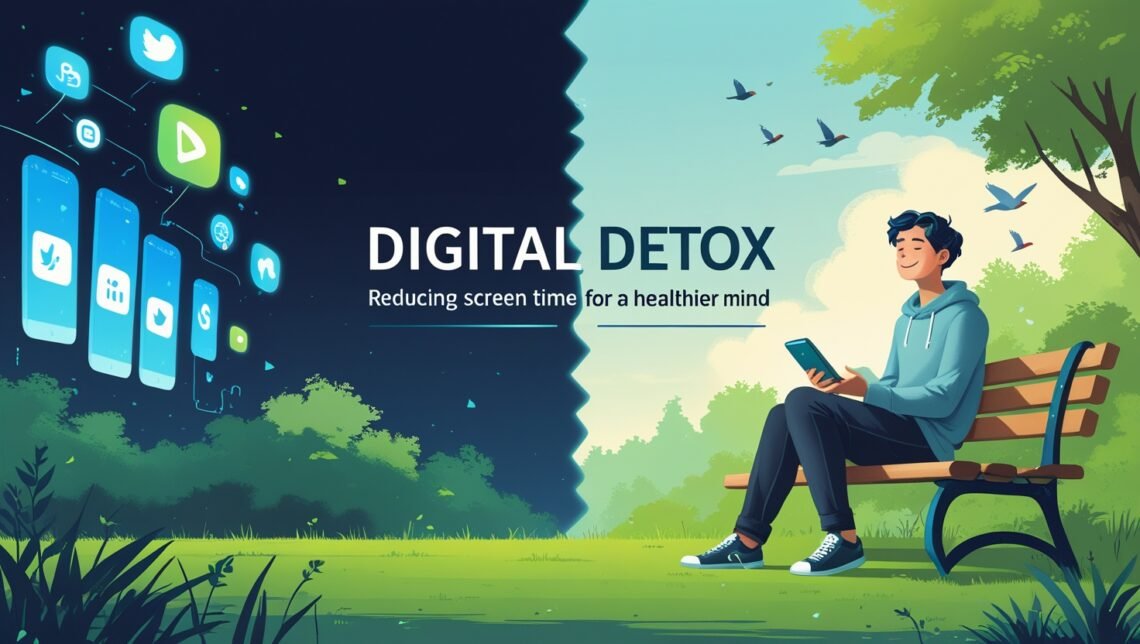
Today’s era is completely based on technology, where every person has become a part of some screen or the other. Mobile phones, laptops, tablets, and smart TVs have made our lives easy, but at the same time have also made us addicted to them. Looking at the screen all the time may seem normal, but in reality, it is such a habit that has a very bad effect on our mental health, physical well-being, and emotional balance. Staying online all the time, scrolling social media and waiting for notifications leads a person towards stress, anxiety, and depression. Because of this, people get disconnected from their real feelings and real life. The name of reconnecting to this disconnect is digital detox.
Digital detox means taking a break from technology for some time so that you can relax your mind, understand your emotions, and feel life without any screens. This detox is not just a way to stay away from screens, but a way to take back control of your life. In this blog, we will understand what digital detox is, who needs it, how you can manage your screen time, and how it can improve your mental and emotional health. In the end, we will see how this small habit can bring about a change in your life.
Understanding Digital Overload and Its Effects on Mental Health
In today’s digital era, everyone is using some device or the other, be it a mobile, laptop, or tablet. When we spend many hours in front of screens daily, it is called “digital overload”. This is a condition where the brain and eyes get tired of being exposed to screens all the time. Its impact is not just limited to physical health, but also has a deep impact on mental health. People become victims of problems like anxiety, depression, and stress.
When screen time is too much, a person gets disconnected from real life, has trouble sleeping, and there is a decrease in social interaction. The brain remains in alert mode all the time, due to which focus and concentration also get affected. This issue is seen even more in children and young adults, where their mood keeps changing all the time, they become irritable, and become victims of isolation. This overload also reduces our productivity. Burning of eyes, feeling of tiredness in the brain, and checking the phone all the time are a part of it. Therefore, we must understand what digital overload is and how it can harm our mental health. Unless we take it seriously, we cannot maintain our health.
What Is a Digital Detox and Why Do You Need One?
Digital detox means keeping yourself away from all electronic devices like mobile phones, laptops, tablets, and TVs for some time. Its basic purpose is to enable a person to relax his mind, get involved in his real life again, and improve his mental and emotional health. Nowadays, everyone is stuck to some screen or the other. As soon as we wake up, the first thing we do is check our phone and then remain entangled in notifications, messages, and emails the whole day. All this puts pressure on our minds, due to which we feel anxious and stressed. Digital detox gives you a chance to step away from technology for some time and feel your real emotions, thoughts, and surroundings.
This can become a new source of energy for you. Through this detox, you can give more importance to your relationships, improve your sleep, and get your creativity back. Digital detox is also important because it gives us back control we are no longer slaves to our phones. When we give up technology, we again feel our inner peace and feelings of calm. Everyone should take out some time daily or weekly for detox so that they can improve their mental and emotional health.
Signs That You Might Need a Digital Detox:
If you are busy all the time on your mobile or any screen device and you feel that you are getting bored without your phone, then you probably need a digital detox. Nowadays, many people repeatedly unlock their phones, check notifications, and scroll social media without any reason. When all this becomes a habit and its effect starts showing on your mood, behavior, and health, then these are warning signs. If you are having difficulty sleeping, you lose track of time while using your phone at night, or you feel the need to look at the screen first thing in the morning, then you have become a victim of digital fatigue. Often, people complain that their eyes are hurting, the brain feels heavy, and they are unable to focus on anything.
These are all signs of digital addiction. Another sign is that you are not interested in meeting and talking to people in real life. When social interaction gets limited to screens only, emotional disconnect begins. If you get angry quickly, have mood swings, or feel stressed all the time, then definitely think that the effect of screens is on your mind. Digital detox is the solution to all these things, and it is time for you to bring your routine into balance.
Effective Strategies to Reduce Screen Time in Daily Life:
If you want to reduce screen time and feel peace in your life, you can take the first step towards a digital detox by adopting some simple strategies. The first way is to set a routine for your day where you fix a time for screen use. Like not looking at the phone immediately after waking up in the morning, rather spend some time in nature or plan yoga, meditation. Another way is to create screen-free zones, like not using mobile phones in the bedroom or at the dining table. Often we use the phone in bed and stay up late at night, which spoils our sleep. It is better to read a book or write a diary instead. You can also set screen-time limit apps on your phone that show you daily usage data and send reminders to take a break. It is also important to reduce the use of social media apps- think of muting or uninstalling them.
Taking an off-screen break of 5-10 minutes after every hour of work is also beneficial for the eyes and mind. Spending time in real life with family and friends automatically reduces screen usage. Rediscover your hobbies that make you happy without the screen. These small things can make a big difference in your life if you follow them regularly.
How a Digital Detox Improves Mental Clarity and Emotional Balance:
When you stay away from digital devices for some time, you feel that your mind has become fresher and clearer. The biggest benefit of a digital detox is that your mental clarity increases. When we look at the screen again and again, our thoughts get scattered. Notifications, videos, and social media posts overload the brain, due to which the ability to think and make decisions gets reduced.
When you do a digital detox, your thoughts get organized, you start understanding things in a better way, and decision-making becomes stronger. Emotional balance also returns. When screen time is reduced, anxiety and stress levels naturally reduce. You begin to understand your feelings, can control your mood, and stay away from negative emotions. After this detox, you also feel positive changes in relationships, you become more patient, and listen well to what others say. Mental clarity and emotional balance are both very important for human health, and this is only possible when we keep the use of technology in balance. Digital detox gives you the opportunity to reconnect with yourself and feel the inner peace that is possible without screens.
Conclusion:
In today’s fast-paced digital era, screen use is unavoidable, but it does not mean that we lose control over it. Everyone should take responsibility for their time and mental health. Digital detox is an important step that we can take to return to our real life. When you stay away from devices for some time, you notice that you are more productive, more relaxed, and more connected to the people around you. This detox makes you understand that technology is our need but only up to a point, and when that need becomes an addiction, then it is important to manage it.
You should spend some time every day where you are only for yourself, screen, no beep or vibration. Just you, your thoughts, and your time. This small practice can become a new light for your emotional well-being. Make your daily routine in such a way that it includes physical activity, connection with nature, and real conversations. Digital detox is not just a trend, but a lifestyle change that makes you feel alive again. Through this detox, you become the master of your time, give peace to your mind, and return to a balanced and healthy life.
FAQs:
- What is a digital detox, and why is it necessary?
A digital detox is when you take a break from electronic devices like mobile phones, laptops, tablets, and TVs for a certain period. It is necessary to reduce stress, relax the mind, improve mental clarity, and reconnect with real life and emotions. Too much screen time can lead to anxiety, sleep issues, and emotional disconnection, so a detox helps bring balance back. - How do I know if I need a digital detox?
You might need a digital detox if you feel anxious without your phone, constantly check notifications, have difficulty sleeping, or feel mentally drained. Other signs include mood swings, eye strain, lack of concentration, and avoiding real-life interactions. These are symptoms of digital fatigue and screen addiction. - What are some easy ways to reduce screen time in daily life?
Start by setting a daily screen-use schedule, avoiding phone use in the bedroom or during meals, and using screen-time tracking apps. Replace late-night scrolling with reading or journaling. Take regular breaks during work, spend more time in nature, and reconnect with offline hobbies and people. - How does digital detox improve mental health?
Digital detox helps clear your mind, improve decision-making, and reduce mental clutter caused by constant notifications and digital noise. It reduces anxiety and stress, helps stabilize emotions, improves sleep, and enhances your connection with others. It also gives you more time to focus on your well-being and real-life goals. - Is it possible to do a digital detox without completely giving up technology?
Yes, you don’t need to quit technology completely. A balanced detox means setting boundaries—like taking tech-free hours, avoiding screens during certain activities, or unplugging on weekends. The goal is not to eliminate devices but to manage your usage mindfully so it doesn’t control your time or affect your health.